
Pregnancy Tracker & Mom Care
ACCONSParenting
3.31.00 Reviews
- Version
- 1.0.5
- Installs
- 500.00K
- Age Rating
- Everyone
Screenshots
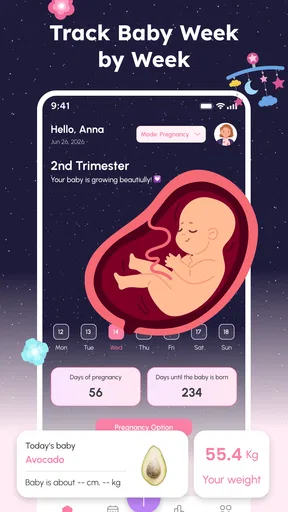
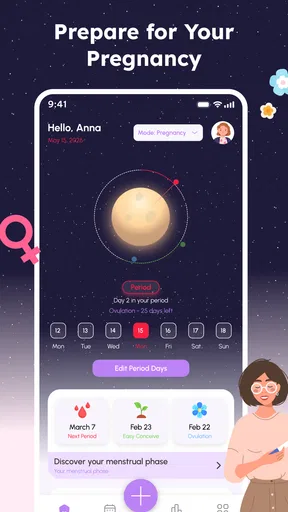
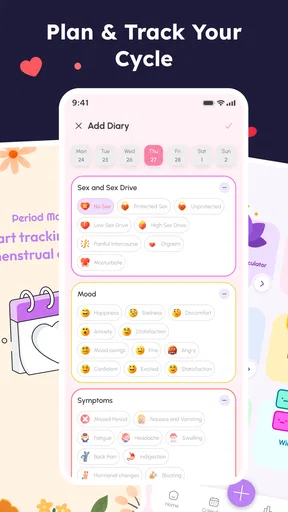
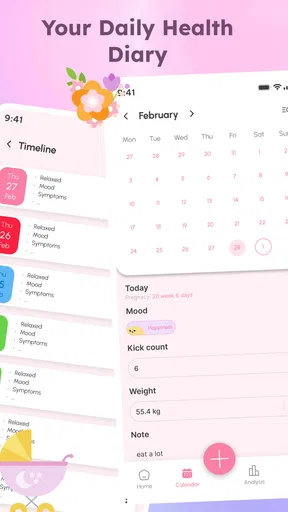
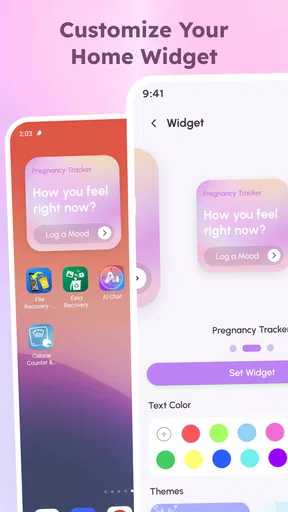
Our Review of Pregnancy Tracker & Mom Care
 Analysis by Appyee
I approached Pregnancy Tracker & Mom Care as the kind of app a person might open every day during pregnancy: not for dramatic predictions or complicated medical analysis, but for a calmer way to keep pregnancy-related information in one place. My overall impression is that it is most useful when treated as an organizing companion rather than a replacement for a midwife, doctor, or carefully maintained medical record. That distinction matters, because a pregnancy app can be comforting and practical while still having clear limits.
Developed by ACCONS, this free parenting app is aimed at people who want pregnancy tracking tools without committing to a paid service. It is available to an Everyone audience, runs on Android devices using at least OS 9, and has reached over 100 thousand installs. The current release is version 1.0.4, and the app was released on July 3, 2026. Those details make it approachable for a broad range of users, especially someone using an older but still supported Android phone.
My central view is simple: Pregnancy Tracker & Mom Care works best as a low-pressure daily reference point. It can help turn a long, changing pregnancy into smaller moments that are easier to follow, but its value depends on how consistently you use it and how sensibly you interpret what it presents. If you want a personal log and a clearer sense of progression, it is worth trying. If you need detailed clinical monitoring, specialist guidance, or a highly connected family-planning system, a different type of tool may suit you better.
What using the app feels like in everyday pregnancy planning
The first strength I noticed is the way a pregnancy tracker can reduce mental clutter. Pregnancy often creates a steady stream of questions: what stage am I in, what should I remember this week, which appointment should I prepare for, and where did I write down that note? A dedicated app gives those thoughts a home. Instead of relying entirely on scattered notes, calendar entries, and memory, I can return to one pregnancy-focused space and use it as a routine check-in.
That routine is more valuable than it may sound. I would not use the app only when I felt anxious, because that could turn any tracker into a source of unnecessary checking. A better workflow is to open it at a consistent time, review the current information, record anything worth remembering, and then close it. This makes the app part of a calm habit instead of an endless search for reassurance.
A realistic example would be a busy weekday when an appointment is approaching. I might check the tracker in the morning, note a question that came up overnight, and use the same session to remember what I want to ask the healthcare professional. Later, rather than trying to reconstruct the week from messages and paper notes, I have a more organized personal reference. The app does not replace the appointment; it helps me arrive better prepared.
This is where the “mom care” side of the product matters. Pregnancy tracking can easily focus only on the baby’s development, while the pregnant person is left treating their own comfort and concerns as secondary. A useful companion should encourage attention to the mother’s experience as well: energy, discomfort, questions, appointments, and the small changes that are easy to forget. Even without turning the phone into a medical device, that broader perspective makes the app feel more relevant to daily life.
Why the free model changes the decision
Because the app is free, the barrier to testing it is low. I do not have to decide whether a subscription is justified before learning whether the layout and tracking approach fit my habits. That is especially helpful for someone who has never used a pregnancy app and is unsure whether digital tracking will actually become part of their routine.
Free access also makes it easier to recommend to a friend who wants a straightforward starting point. The trade-off is that I would not assume a free app can replace every feature found in a specialist paid platform. Paid alternatives may offer richer personalization, broader educational libraries, integrations, or more advanced planning tools. If those extras are central to your needs, the absence of a cost is less important than the depth of the experience.
I also appreciate that the Everyone age rating makes the app feel suitable for general household use. A partner, relative, or older child who is curious about the pregnancy can understand the basic purpose without the app being framed as something restricted or intimidating. Still, I would keep personal health information under the control of the pregnant person and share only what feels comfortable.
Small workflows that make a tracker more useful
The first practical tip I would give is to use the app alongside, not instead of, a question list for appointments. When a concern appears, write down the wording that best describes it rather than trusting memory. A short note such as when something began, whether it changed, and what seemed to affect it can make a conversation with a healthcare professional more efficient. The tracker becomes valuable here because it gives the question a consistent place to live.
My second tip is to separate information from interpretation. A tracker may help me notice a pattern or remember a detail, but noticing something does not tell me what it means medically. If a symptom feels unusual, severe, or worrying, I would contact an appropriate healthcare professional rather than waiting for an app entry to explain it. This is one of the most important boundaries for any pregnancy companion.
A third useful approach is to make the app part of a shared preparation routine without turning it into a shared surveillance tool. A partner could use it as a prompt to ask, “Is there anything you want to bring up at the next appointment?” That is more supportive than repeatedly asking for updates or treating the tracker as a scorecard. The app can support communication, but the pregnant person should remain in control of what is recorded and discussed.
Finally, I would review older entries occasionally rather than checking only the current day. Looking back can help me remember how a particular week felt, which questions were already answered, and what I want to mention at the next visit. This turns the app from a stream of isolated check-ins into a personal timeline. It is a subtle change in use, but it gives the information more practical value.
Where it is stronger than ordinary alternatives
The usual alternative is a general notes app. Notes are flexible, but they offer no pregnancy-focused structure, so I have to create headings, dates, reminders, and categories myself. That can work for someone who enjoys building a personal system, but it also creates friction at a time when energy and attention may already be limited. Pregnancy Tracker & Mom Care has a clearer purpose from the moment I open it.
A general calendar is useful for appointments, but it is not designed to hold the wider pregnancy experience. It can tell me when an appointment happens, yet it does not feel like a dedicated place for pregnancy-related tracking. I would still use a calendar for fixed commitments, but a pregnancy app can sit beside it as the more focused companion.
Large pregnancy platforms are another alternative. They may feel more polished or expansive, particularly for someone who wants articles, communities, shopping ideas, and multiple forms of personalization in one service. The downside is that a larger platform can feel busy. More content is not automatically better when I only want a quick check-in and a simple way to stay organized. Pregnancy Tracker & Mom Care is more appealing to someone who values focus over a crowded collection of extras.
There is also the paper notebook, which remains a perfectly good option. Writing by hand can be comforting, private, and flexible, and it never depends on a phone battery or an app interface. The digital tracker wins when I want information available while away from home or prefer a more repeatable routine. The notebook wins for people who think better on paper or dislike entering personal details into an app.
The meaningful limitations I would consider first
The main limitation is that organization can be mistaken for medical authority. A pregnancy tracker may make information feel official simply because it is displayed neatly. I would resist that impression. The app should help me remember, prepare, and reflect; it should not be the final word on symptoms, medication, test results, or urgent concerns.
Another possible point of friction is consistency. A tracker only becomes useful when I return to it and record information in a way that makes sense later. If I open it once and never establish a habit, it may feel like another unused download. This is not a flaw unique to this app, but it is especially relevant for pregnancy tools because their usefulness builds over time rather than appearing in one dramatic moment.
I would also be cautious if I wanted a complete medical record. A personal tracker is not the same thing as a healthcare provider’s system. Important results, instructions, and clinical decisions should remain in the channels provided by the care team. I would use this app to support those conversations, not to create a parallel record that I assume everyone else can access or interpret.
People who want social interaction may find a focused tracker less satisfying than a community-centered pregnancy service. Some users need reassurance from conversations with others, while others prefer not to see a constant stream of opinions. If discussion, peer support, or extensive educational content is the main reason you are downloading an app, compare the experience carefully with platforms built around those purposes.
There is also a psychological trade-off. Tracking can make some people feel grounded, but it can make others monitor every small change too closely. I would pay attention to my own reaction. If opening the app makes me more worried rather than more prepared, reducing use or choosing a simpler notebook may be healthier. The best pregnancy tool is the one that supports calm, not the one that encourages compulsive checking.
Who I think will get the most from it
I would recommend Pregnancy Tracker & Mom Care to someone who wants a dedicated starting point for pregnancy organization and does not want to pay before trying the format. It is a particularly sensible choice for a first-time user who wants to build a routine around tracking, appointment preparation, and personal notes without assembling a system from several unrelated apps.
It can also suit a person who already uses a calendar and wants something more pregnancy-specific beside it. The two tools serve different purposes: the calendar protects time, while the tracker helps keep pregnancy-related thoughts and observations together. Used that way, the app does not need to do everything to be useful.
A partner may also appreciate it as a prompt for practical support, provided the pregnant person chooses how much to share. The most helpful use is not checking whether someone has completed every entry. It is using the information as a starting point for conversations about appointments, comfort, preparation, and questions.
I would skip it, or at least look beyond it, if I wanted specialist-level monitoring, extensive medical documentation, or a comprehensive pregnancy ecosystem with many connected services. I would also skip it if I already have a trusted system that I use consistently and do not want another place to maintain. Adding an app only helps when it removes effort rather than creating another obligation.
My verdict after weighing convenience against caution
Pregnancy Tracker & Mom Care earns its place as a practical, accessible pregnancy companion because it focuses on a need many people genuinely have: keeping the experience organized enough to feel manageable. Its free price and broad compatibility make it easy to try, while its parenting focus gives it a clearer role than a generic notes or calendar app.
My recommendation comes with a firm condition: use it as a personal organizer and conversation aid, not as a diagnostic service. The strongest results will come from a modest routine, thoughtful notes, and a clear habit of taking medical concerns to qualified professionals. That approach avoids both extremes—ignoring useful tracking altogether or expecting an app to answer questions it was never meant to settle.
For someone who wants a focused, no-cost way to follow pregnancy and keep mom-centered concerns from getting lost, I think it is a worthwhile download. For users seeking a deep medical platform, a large social community, or a fully integrated family-management system, another option may be a better match. My final opinion is favorable but measured: this is most successful when it makes everyday preparation easier without pretending to replace human care.
Privacy and Permissions
See what permissions an app requests and how it handles your data.
- Other
- view network connections, full network access, control vibration, prevent device from sleeping, Google Play license check
Verdict
Strengths of Pregnancy Tracker & Mom Care
- Tracks pregnancy milestones and fetal development week by week.
- Helpful reminders for appointments, vitamins, and important tasks.
- Simple interface makes daily pregnancy information easy to access.
- Includes practical tips for nutrition, exercise, and prenatal care.
- Can help expectant mothers organize symptoms and pregnancy notes.
Limitations of Pregnancy Tracker & Mom Care
- Some features may require a subscription or in-app purchases.
- Pregnancy information cannot replace advice from a qualified healthcare professional.
- Personalized tracking may require entering sensitive health information.
- Notifications can become repetitive during long-term use.
- Content and due-date estimates may vary from one pregnancy to another.
Similar Picks in This Category
View All
Family Space
Motorola Mobility LLC.3.9

شرطة الأطفال - مكالمة وهمية
Oub Apps4.1

Findmykids: Parental Control
LETEM LTD4.6

Pregnancy + | Tracker App
Philips Electronics UK Limited4.8

Policía de niños - para padres
Kids police4.7

Pregnancy App
Amila4.9
Frequently Asked Questions
What is Pregnancy Tracker & Mom Care used for?
Pregnancy Tracker & Mom Care is designed to help expectant parents follow pregnancy progress from the early weeks through delivery. It may provide weekly information about fetal development, pregnancy milestones, symptom guidance, appointment reminders, weight tracking, kick counting, contraction timing, and preparation checklists. The app is best viewed as an organizational and educational companion rather than a replacement for personalized medical care.
How accurate are the pregnancy week and due-date calculations?
The app generally estimates pregnancy progress and the expected due date using information such as the first day of your last menstrual period or details provided by your healthcare professional. These calculations are useful for general tracking, but they are not guaranteed to be exact because ovulation, cycle length, implantation, and ultrasound findings can vary. Always confirm your due date with your doctor or midwife.
Can Pregnancy Tracker & Mom Care replace advice from a doctor or midwife?
No. Although the app can offer helpful educational content, reminders, and tracking tools, it cannot diagnose medical conditions or assess your individual pregnancy. Symptoms such as severe pain, heavy bleeding, reduced fetal movement, severe headache, vision changes, swelling, fever, or fluid leakage require professional attention. Contact your healthcare provider or emergency services whenever you are concerned.
What information can I track in the app, and is it suitable for every pregnancy?
Depending on the version and available features, you may be able to record symptoms, mood, weight, appointments, medication notes, baby movements, contractions, and personal pregnancy milestones. These tools can make information easier to organize for medical visits. However, high-risk pregnancies, multiple pregnancies, fertility treatments, and certain medical conditions may require specialized monitoring that the app cannot provide.
Is my pregnancy information private and safe in Pregnancy Tracker & Mom Care?
Before entering sensitive information, review the app’s privacy policy, permissions, account settings, and data-sharing practices. Pregnancy records can include personal health information, so check whether data is stored locally, synchronized online, used for analytics, or shared with third parties. Use a strong password, avoid unnecessary permissions, and delete your data or account if the available privacy controls do not meet your expectations.
